
10 Types of Press Tool Operations: A Complete Guide for Manufacturers
Press tool operations use a punch, die and press to cut, shape or form sheet metal. Common operations include blanking, piercing, bending, drawing, forming, coining, embossing, notching and lancing.
The best process depends on the part geometry, material, tolerances, quantity and tooling requirements. For short-run production, manufacturers may also combine press operations with laser cutting to avoid unnecessary tooling while still gaining the repeatability of stamping and forming.
10 Common Press Tool Operations
| Operation | What It Does |
|---|---|
| Blanking | Cuts the outside shape of a part |
| Piercing | Creates holes, slots or openings |
| Shearing/Cutoff | Separates or sizes sheet metal |
| Bending | Creates angles, flanges and bends |
| Drawing | Forms flat sheet into a three-dimensional shape |
| Forming | Creates ribs, hems, flanges and other features |
| Coining | Uses concentrated pressure to create or refine a feature |
| Embossing | Produces raised or recessed features |
| Notching | Removes material from an edge or corner |
| Lancing | Cuts and forms material without completely removing it |
1. Blanking
Blanking cuts the outside profile of a part from sheet metal.
The piece removed from the sheet becomes the finished blank or moves on to additional forming or stamping operations.
The difference between blanking and piercing is simple: in blanking, the material removed is the part. In piercing, the removed material is generally scrap.
2. Piercing
Piercing creates holes, slots or internal openings.
It is commonly used for mounting holes, fastener locations, slots, vents and other assembly features.
When quantities and part requirements justify tooling, piercing can eliminate separate drilling or machining operations.
3. Shearing and Cutoff
Shearing separates sheet metal along a straight line, while cutoff separates a part or section from a strip or sheet.
These operations may be used to size material, trim edges or prepare blanks for additional fabrication.
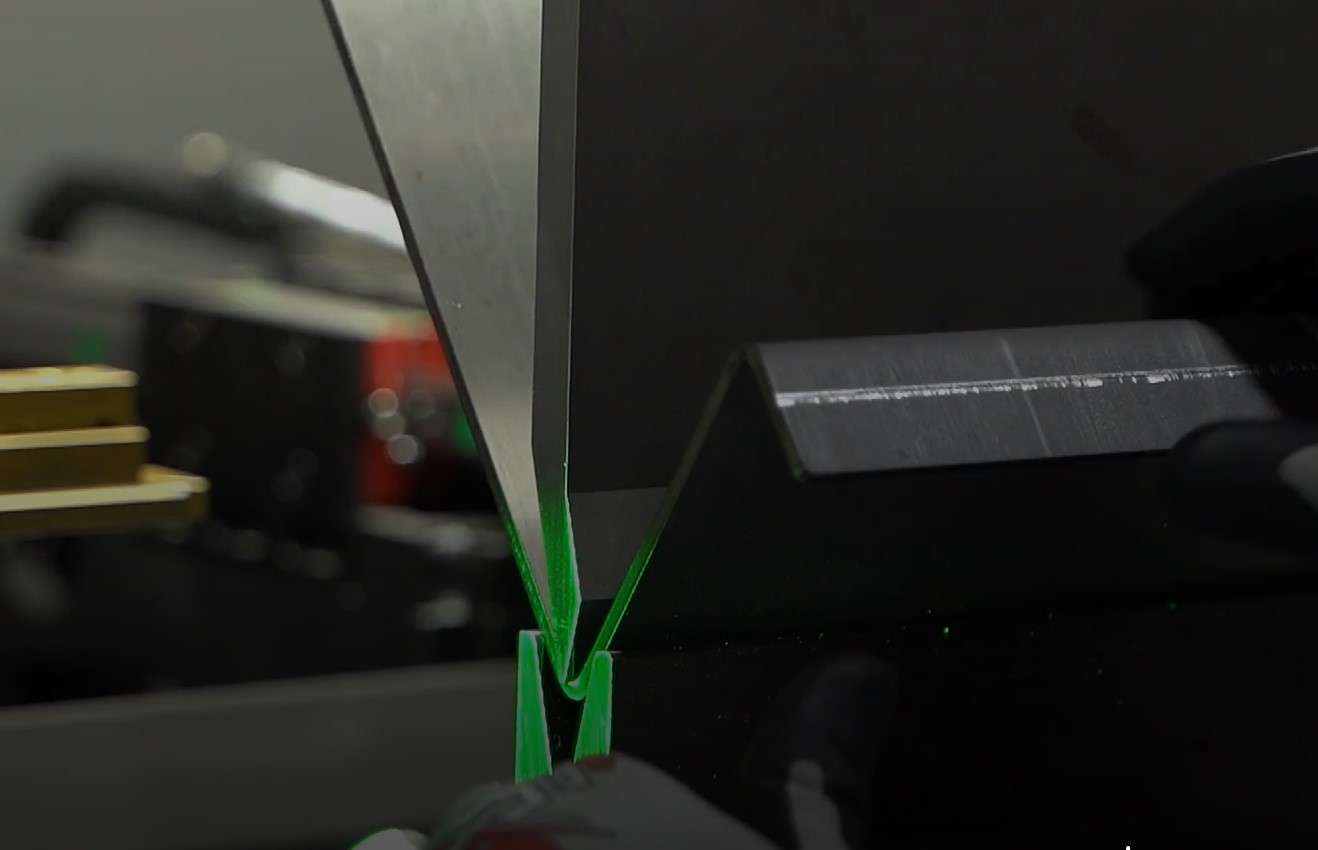
4. Bending
Bending changes the angle of sheet metal without removing material.
Typical features include flanges, brackets, channels and tabs.
Some bends can be incorporated into press tooling. Others are better suited to press brake forming, depending on part geometry, quantity and tooling needs.
5. Drawing
Drawing forms flat sheet metal into a three-dimensional shape by controlling how the material flows into a die.
Material properties, part geometry, blank size and tooling all affect the result. Deep drawing is a more specialized form of this process used for deeper formed shapes.
6. Forming
Forming changes the shape of sheet metal without cutting material away.
It can create flanges, ribs, hems, offsets and other features that add strength, improve fit or provide a specific function.
For short-run production, forming can also be performed after a flat blank has been produced by laser cutting.
7. Coining
Coining applies concentrated pressure to create or refine a feature in the metal.
It can be used for defined edges, surface details, identification features or localized dimensional changes.
Material, tooling and press capacity must all be considered.
8. Embossing
Embossing creates a raised or recessed feature without cutting through the sheet.
Embossed features may provide identification, alignment, added stiffness or a functional surface detail.
9. Notching
Notching removes material from an outside edge or corner of a part.
It may provide clearance, prepare a part for bending, improve assembly fit or create tabs and mating features.
10. Lancing
Lancing cuts and forms a section of material without completely removing it.
It can create tabs, vents, louvers, stops and alignment features while keeping the feature attached to the original part.
Can Multiple Press Operations Be Combined?
Yes. Depending on the part and tooling, multiple operations can sometimes be completed together.
Compound tooling can perform multiple cutting operations in one press stroke, such as blanking the outside profile while piercing internal holes.
Combination tooling may combine cutting and forming operations.
Combining operations can reduce handling and improve repeatability, but more complex tooling is not always the most economical choice. Part complexity, production quantity, design stability and expected repeat orders should all be considered.
When Does Laser Cutting Make More Sense?
Not every sheet metal part needs a dedicated blanking tool.
CNC laser cutting can produce a flat profile directly from a CAD file, making it useful when:
- Quantities are relatively low
- Designs may change
- Profiles are complex
- Several part variations are needed
- Dedicated cutting tooling is difficult to justify
A laser-cut blank can then move to a press for punching or forming when those operations add value.
There is no universal quantity at which a part should switch from laser cutting to stamping. The best choice depends on the complete part and production requirements.
Learn more in When Does Short-Run Stamping Make Sense After Laser Cutting?
Press Tool Operations at Fox Valley Stamping
Fox Valley Stamping specializes in short-run metal stamping and precision sheet metal fabrication.
FVS stamping equipment includes:
- AIDA servo press — 121 U.S. tons
- Komatsu mechanical press — 45 tons
- Komatsu mechanical press — 60 tons
Rather than assuming stamping is the right choice for every part, FVS evaluates the drawing, material, geometry, quantity and downstream requirements to determine whether the project is better suited to laser cutting, stamping, forming or a combination of processes.
Frequently Asked Questions
What is the difference between blanking and piercing?
In blanking, the material removed becomes the part or blank. In piercing, the removed material is generally scrap and the opening remains in the part.
Can multiple press operations be combined?
Yes. Depending on the part and tooling, cutting and forming operations can sometimes be combined to reduce handling and improve repeatability.
When is laser cutting better than blanking?
Laser cutting is often worth considering for prototypes, lower quantities, complex profiles or designs that may change because it does not require dedicated cutting tooling.
Is press tooling only for high-volume production?
No. Press operations can also make sense for short-run production when tooling can efficiently create a recurring feature or improve repeatability.
Need Help Choosing the Right Process?
The best manufacturing method may involve more than one process.
Fox Valley Stamping can review your drawing to determine whether your part is better suited to laser cutting, short-run stamping, forming or a combination of processes.
Learn more about short-run metal stamping or request a quote.