
Precision Laser Cutting for Sheet Metal Parts
Fox Valley Stamping has been producing precision metal components since 1965. As a family-owned company, we focus on practical, efficient manufacturing—getting parts made right and on time.
Laser cutting is the starting point for most of the work we do. It’s how flat sheet metal becomes accurate, production-ready parts.
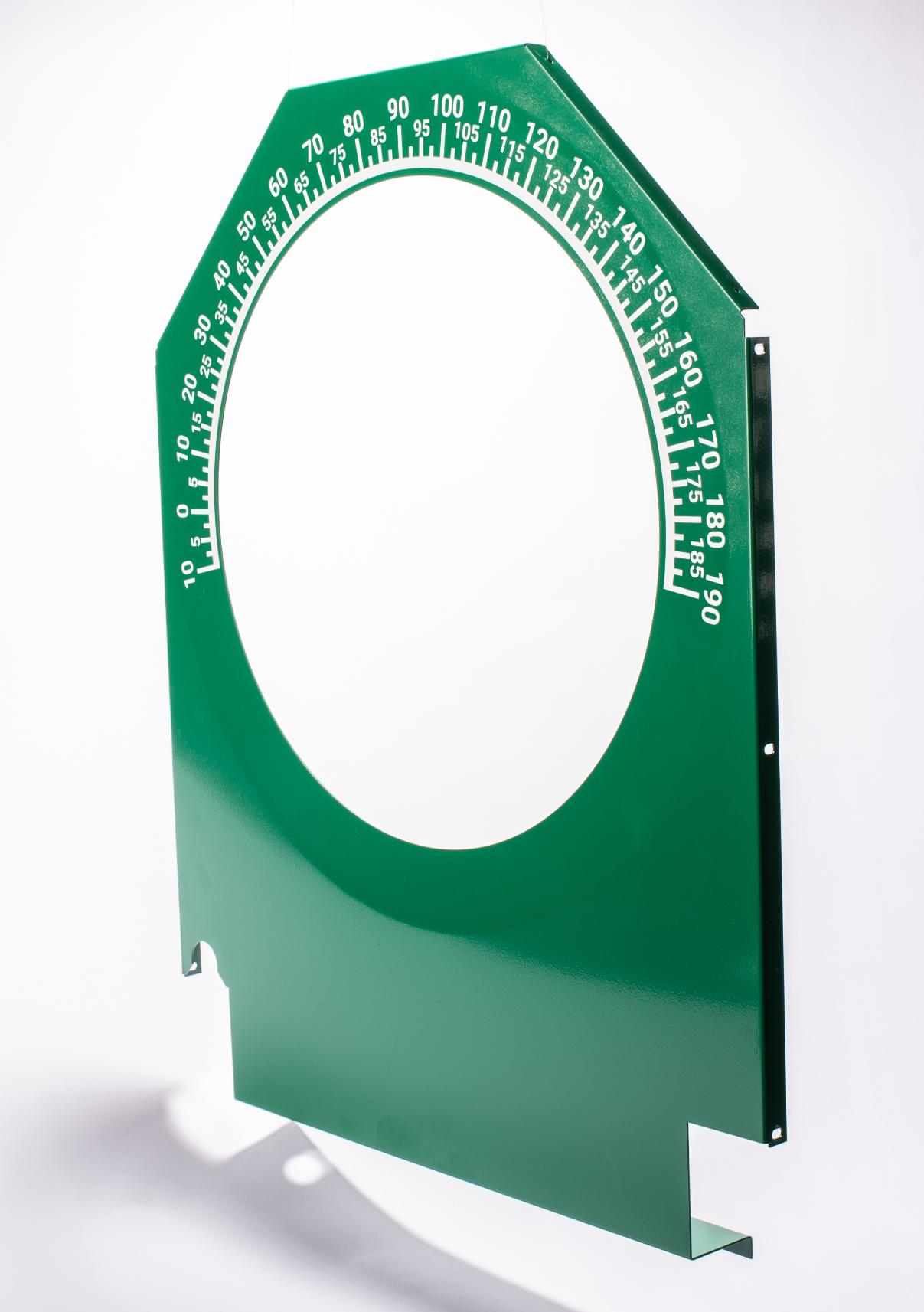
CNC-controlled laser technology allows us to produce complex profiles, detailed features, and repeatable cuts for a wide range of precision metal components.

Laser Cutting Capabilities
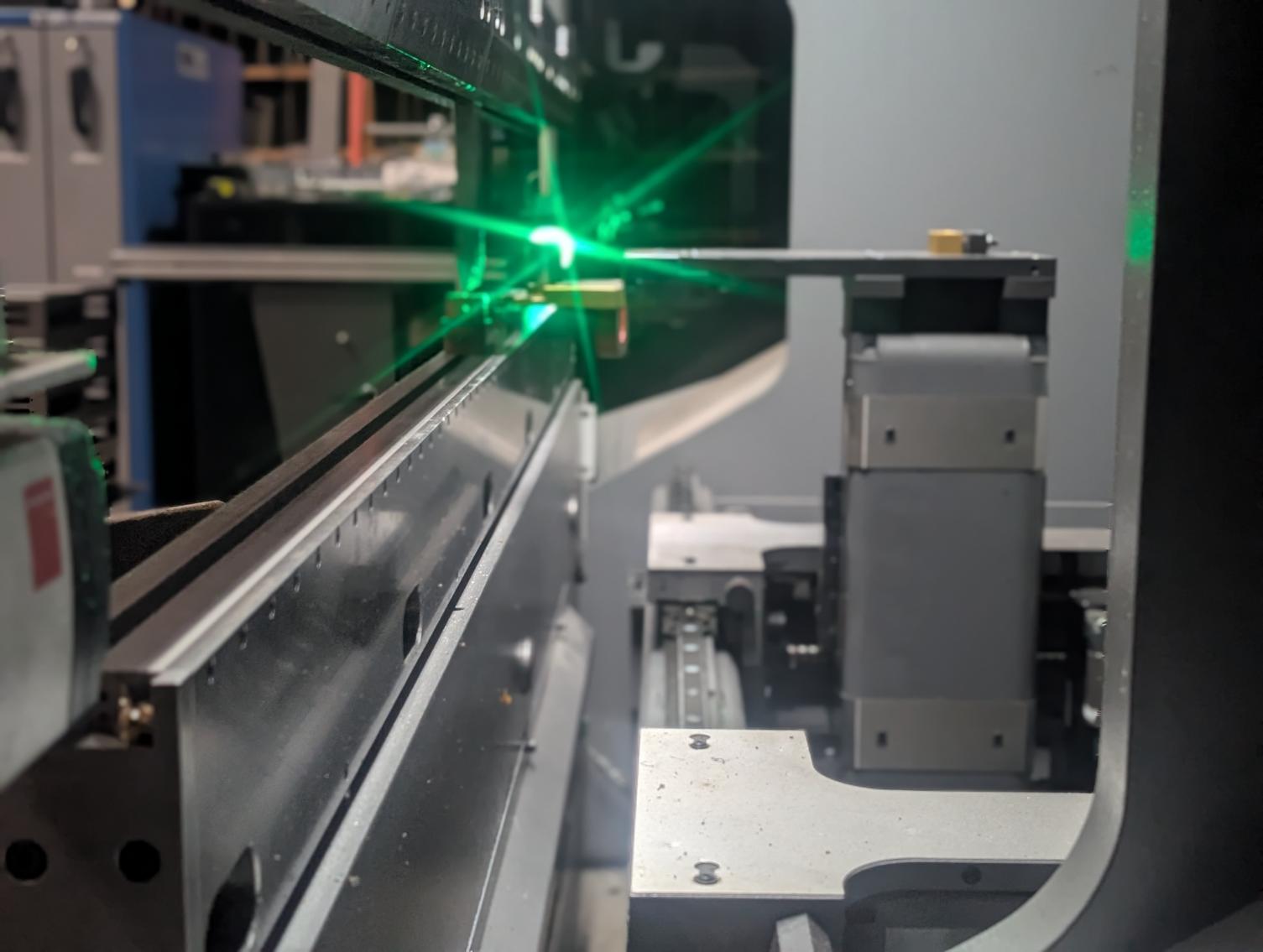
We operate a Bystronic BySmart Fiber 3015 (8 kW) fiber laser, designed for fast, consistent cutting across a wide range of materials.
Maximum Material Capacity
• Mild Steel: up to 1.00”
• Galvanized / Galvannealed Steel: up to 3/16”
• Stainless Steel: up to 1.125”
• Aluminum: up to 1.180”
• Brass: up to 0.625”
• Copper: up to 0.500”
Actual production thickness depends on material type, part geometry, feature size, and efficiency requirements. Material selection and design details such as small features, hole sizes, spacing, and cut complexity can influence achievable tolerances, edge quality, and overall cutting performance.
Sheet Size Capacity
• Up to 60” x 120”
How Parts Move Through Production
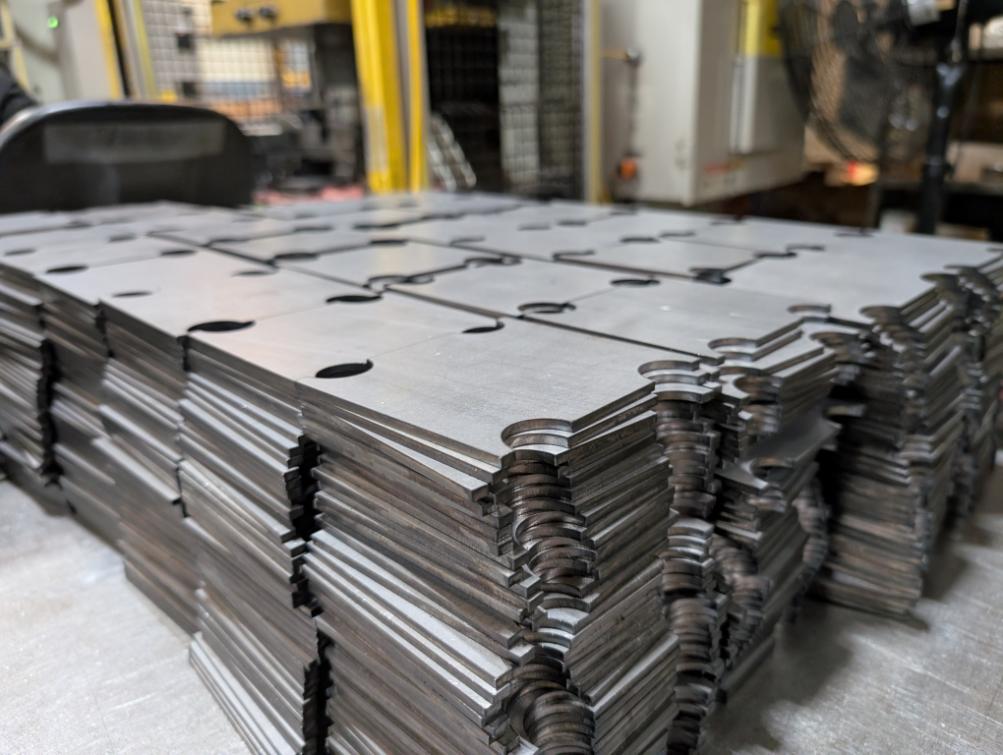
Most parts begin with customer CAD files or engineering drawings, which are reviewed for material requirements, dimensions, tolerances, and manufacturability before production begins. From there, flat sheet metal is cut to:
- Create the part profile
- Cut holes and internal features
- Produce accurate blanks
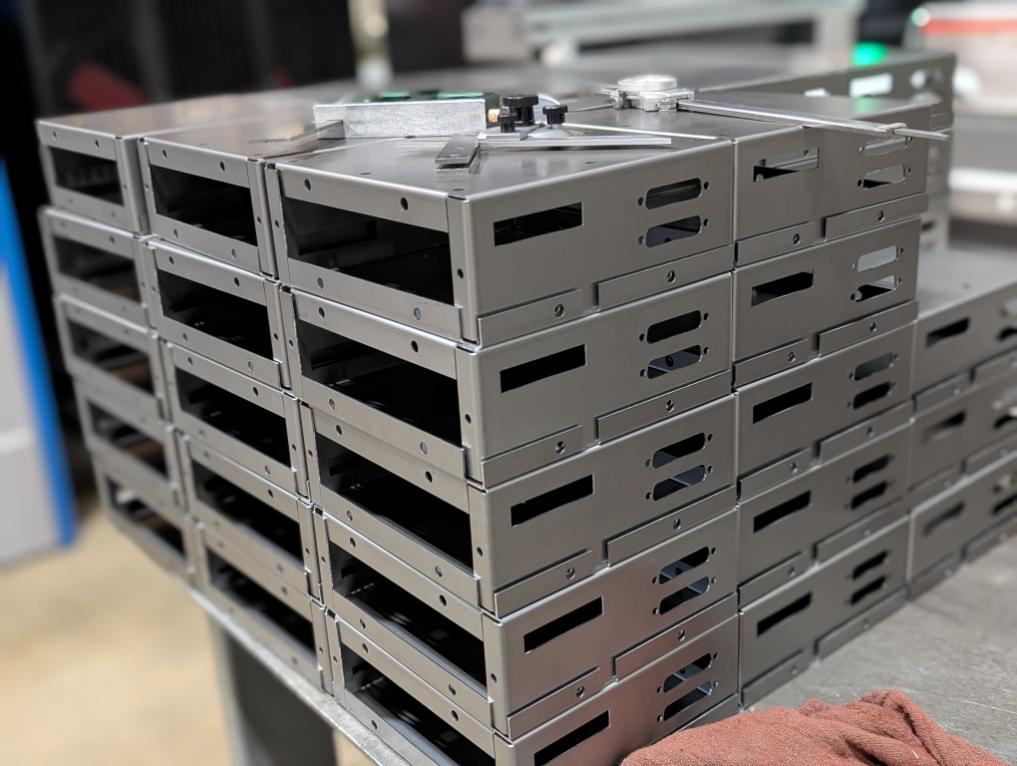
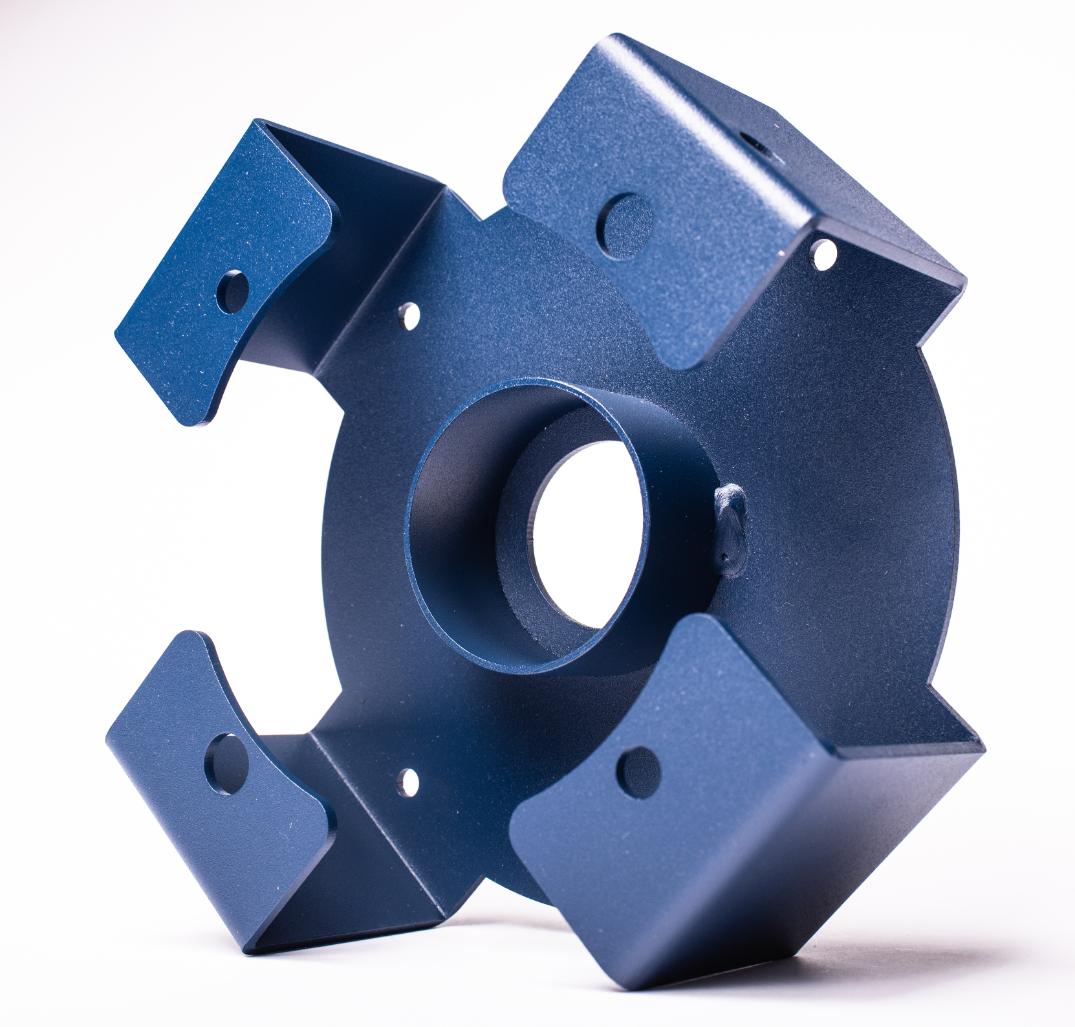
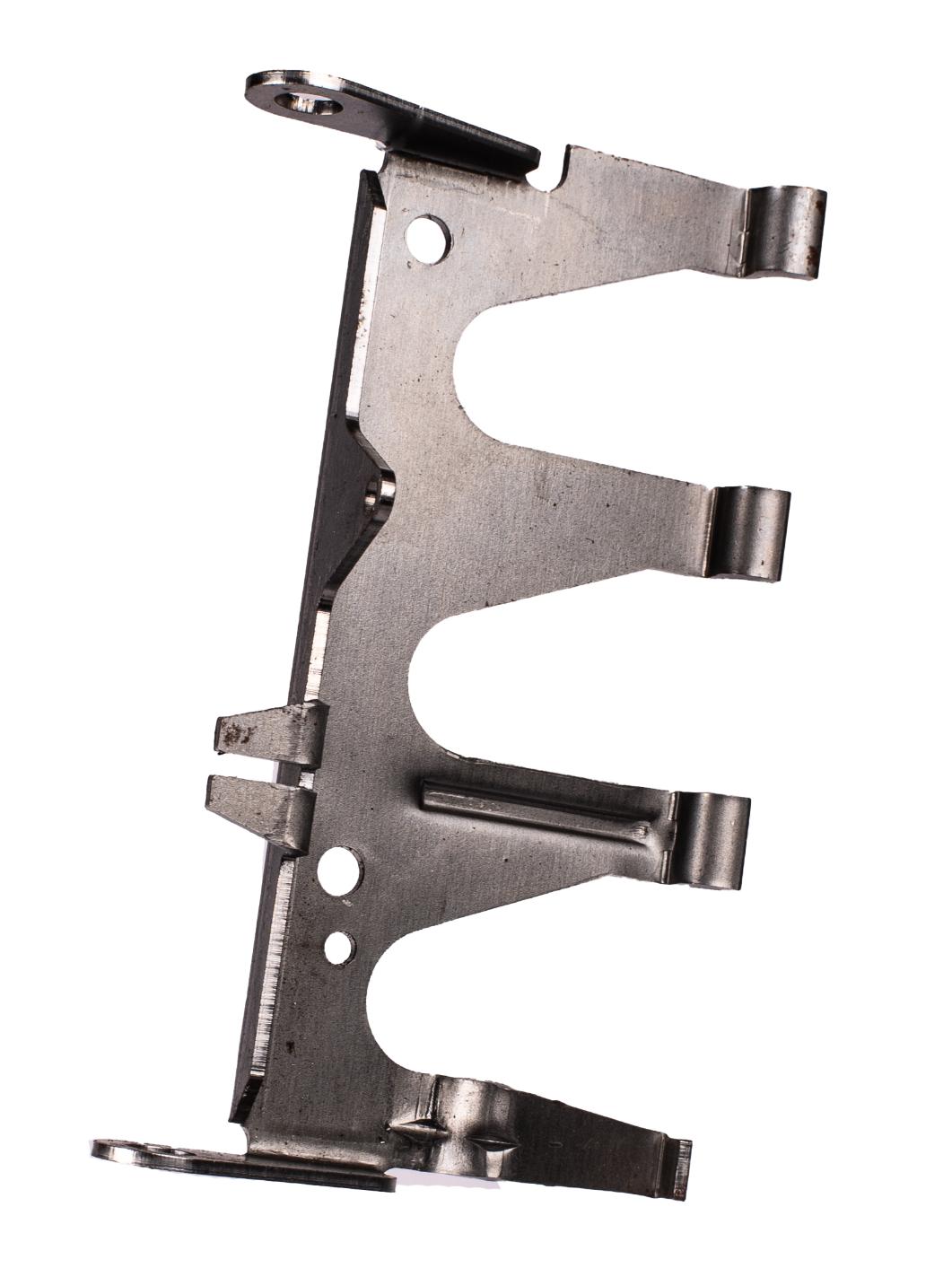
After laser cutting, parts may move to additional operations such as forming, welding, assembly, or secondary processes depending on the design. Starting with an accurate cut part helps reduce unnecessary setup and keeps production moving efficiently.
Why Laser Cutting Works So Well
Laser cutting gives you flexibility early and consistency later. Because it requires no dedicated tooling, designs can be adjusted quickly, making it a practical choice for prototypes, short runs, and production components.
- No tooling required
- Quick setup from CAD files
- Easy to adjust if designs change
- Accurate across simple and complex parts
For many parts, this remains the most efficient way to produce them—even as volumes increase.




From CAD File to Finished Parts
We use:
- BySoft CAM for nesting and programming
- SolidWorks integration for handling customer files
This allows us to:
- Maximize material usage
- Reduce scrap
- Keep parts consistent from run to run
You send a file—we turn it into parts without unnecessary steps.
More Than Just Cutting
After parts are cut, additional processes may be used depending on the job.
These can include:
• Forming and bending
• Welding and assembly
• Secondary operations such as short-run stamping
Some parts require multiple steps. Others are complete after cutting. We evaluate that based on what actually makes sense for production.
While laser cutting is effective for many sheet metal applications, some designs may require additional processes depending on material thickness, geometry, tolerances, or finished part requirements. Forming, stamping, machining, or secondary operations may be recommended when they provide a better manufacturing solution.
How We Approach Production
We don’t ask customers to choose a process.
We look at:
• The part design
• The material
• How often it will be produced
Then we recommend the most efficient way to run it.
In many cases, that means staying with laser cutting. In others, it may include additional steps—but only when they add value.
Custom Metal Fabrication for your needs.

Our advanced CNC laser cutting technology ensures precise and efficient cutting of various metals, accommodating complex designs with high accuracy.

Our skilled welders deliver high-quality, intricate, and durable parts, ensuring superior craftsmanship and enhanced efficiency in every project.

Our press brake forming services allow us to bend and shape metal components with precision, accommodating complex geometries and ensuring consistency across production runs.

Specializing in customized short-run metal stampings, we utilize state-of-the-art machinery to deliver efficient and precise results for prototypes, small production runs, and custom designs.

To provide a complete manufacturing solution, we offer a range of secondary services, including assembly, finishing, and value-added operations, ensuring your components are ready for immediate use.

We offer comprehensive assembly services, transforming individual components into finished products for a complete manufacturing solution.