

When Does Short-Run Stamping Make Sense After Laser Cutting?
Most sheet metal parts start with laser cutting because it offers the speed, flexibility, and precision needed during early production. It allows manufacturers to quickly create accurate part shapes and features without the cost or lead time of dedicated tooling.
As production becomes more consistent and part designs are finalized, short-run stamping may be introduced to improve efficiency, repeatability, and overall production speed.
Laser cutting and stamping are not always separate manufacturing choices. Many parts benefit from a combination of both processes, using laser cutting for flexibility and stamping for repeatable forming or higher-volume production.
Laser Cutting Comes First
Laser cutting is typically the foundation of sheet metal fabrication because it provides the speed, flexibility, and precision needed during early production. It is often the most efficient way to produce initial parts, prototypes, and lower-volume production runs while still allowing room for design changes.
Benefits of laser cutting include:
- Fast production
- Design flexibility
- Precise part creation
- No upfront tooling investment
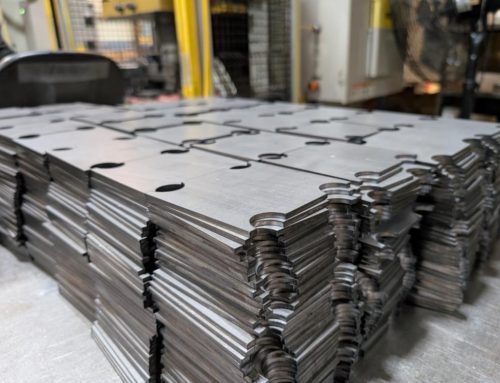
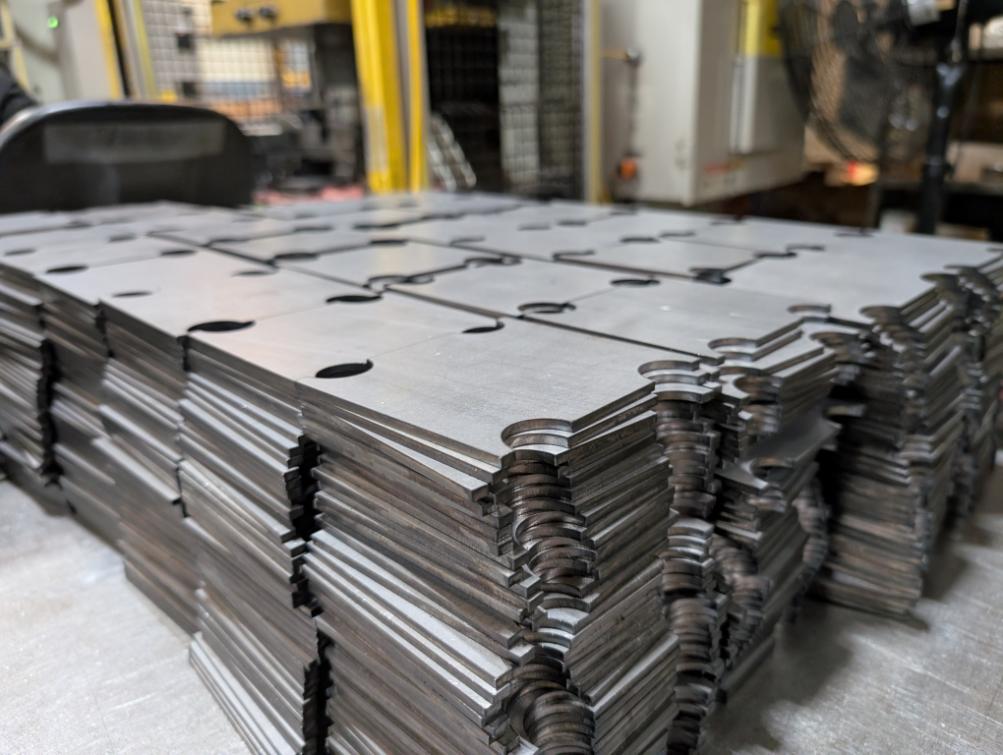
Laser-cut blanks can also provide an efficient starting point for stamped components. This approach allows manufacturers to validate designs, produce initial parts, and delay dedicated tooling decisions until production requirements are better established.
When Short-Run Stamping Becomes Valuable
Short-run stamping is usually evaluated later in the manufacturing process after a part has been proven, standardized, and repeatedly reordered. At that point, stamping may help improve production efficiency and consistency. Production volume is one of the biggest factors in this decision. Laser cutting is often the better choice for prototypes, design changes, and lower-volume production, while stamping can become more cost-effective as production quantities increase.
Short-run stamping can support:
- Production consistency
- Repeatability across runs
- Manufacturing efficiency
- Cost per part at higher volumes
Rather than replacing laser cutting, short-run stamping is often introduced as a secondary process to support stable, repeat production.
5 Signs It May Be Time to Consider Stamping
Not every part needs stamping right away. In many cases, laser cutting remains the best option during early production and design changes. However, there are several signs that it may be time to evaluate short-run stamping.
- The Part Design Is Finalized
Frequent revisions are no longer happening, and the part geometry has become stable enough to support dedicated tooling.
- You’re Reordering the Same Part Consistently
Production has shifted from occasional orders to repeat manufacturing of the same component.
- Production Volumes Have Become Predictable
Demand is steady, making it easier to justify processes focused on long-term efficiency.
- Manufacturing Efficiency Is Becoming More Important
The focus moves from flexibility and quick changes to improving production speed and workflow consistency.
- Repeatability Matters Across Every Run
Maintaining consistent part quality, dimensions, and performance becomes increasingly important as production grows.
Tooling Considerations
Short-run stamping uses simple punch and die setups that are designed to support repeat production without requiring complex tooling systems. The level of tooling investment depends on part complexity, production volume, and the level of repeatability required.
These setups can help:
- Support repeat production
- Improve efficiency for ongoing runs
- Reduce the need for complex tooling systems
Beyond Cutting: Additional Fabrication Processes
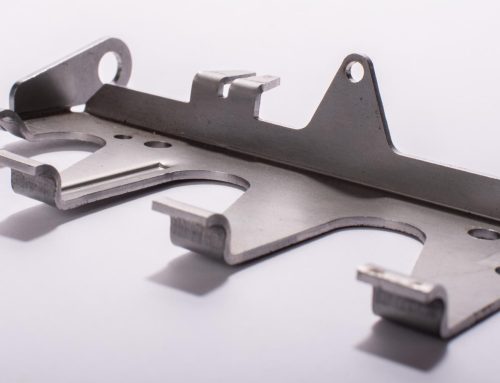
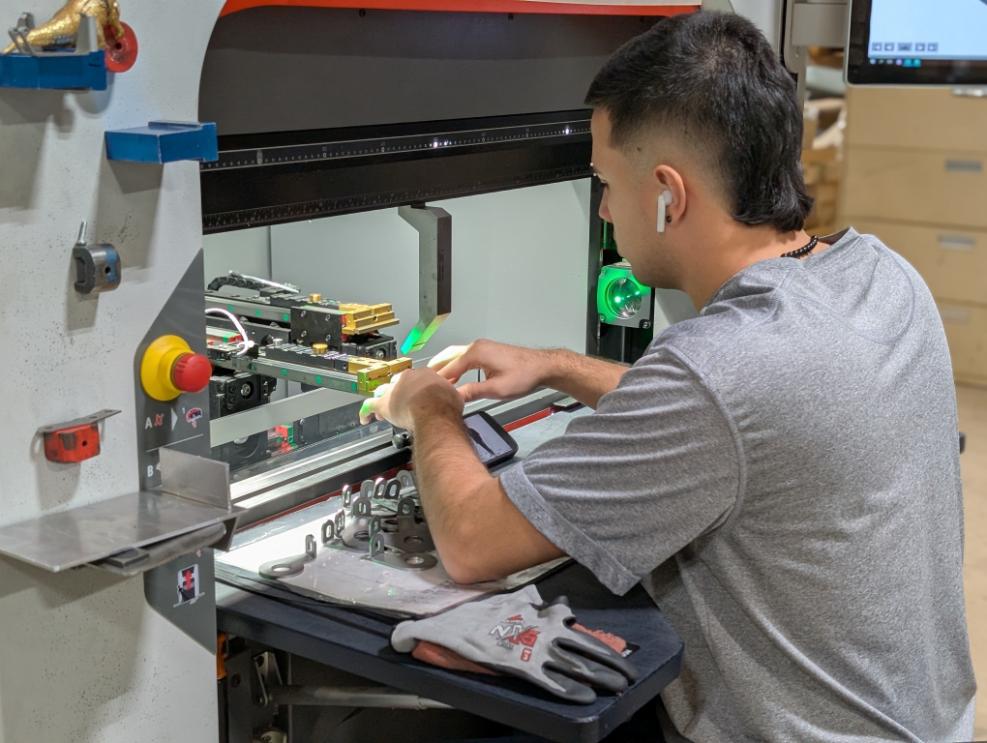
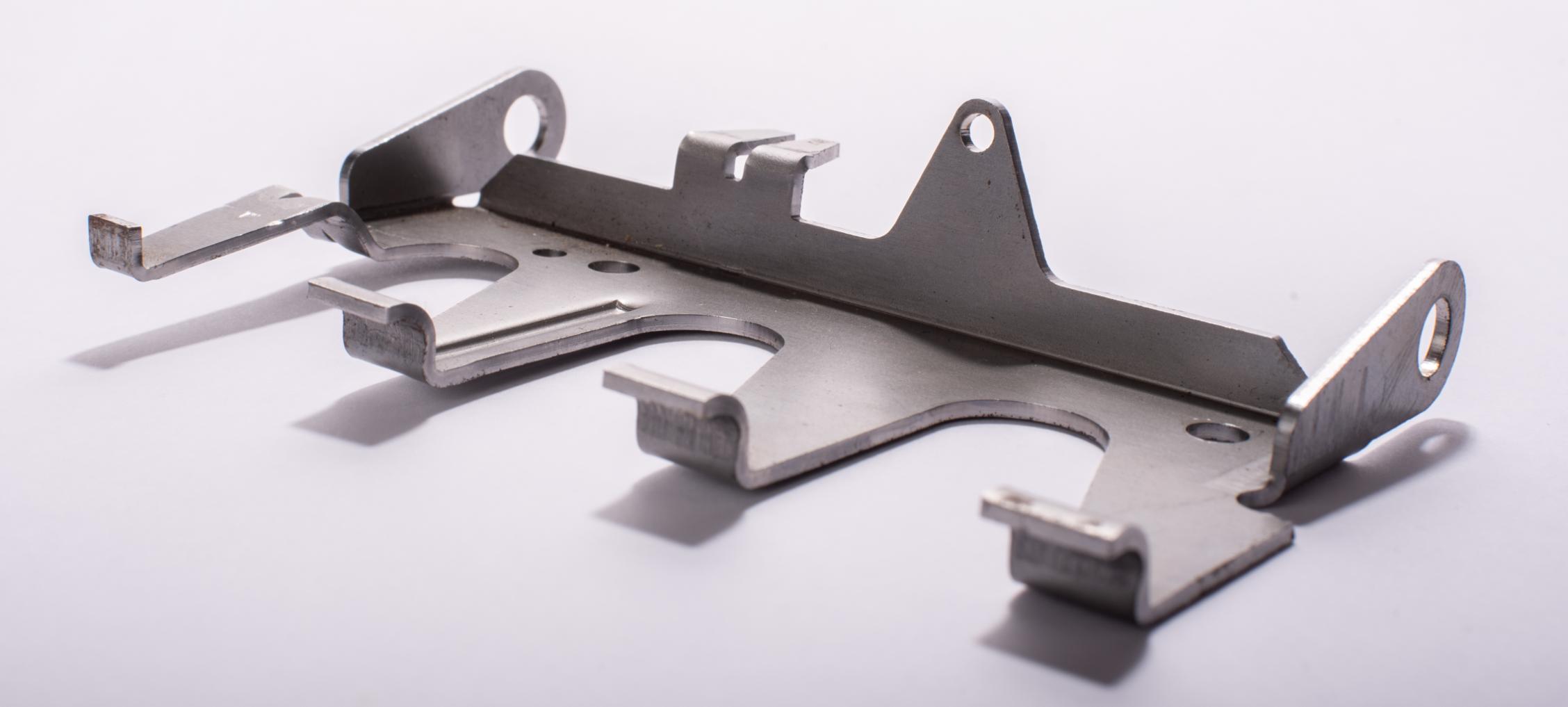
After laser cutting, parts may also require additional fabrication processes depending on the part design and end-use requirements. In some applications, laser cutting creates the initial blank while stamping is used for secondary operations such as forming, embossing, or other repeatable features. Combining processes allows manufacturers to use the strengths of each method where they provide the most value.
These processes may include:
- Forming and bending
- Welding and assembly
- Additional secondary operations as needed
Stamping is just one of several processes that may be used depending on the part, production volume, and long-term manufacturing goals.
How Cost Influences the Decision
Laser cutting avoids upfront tooling costs and remains efficient for many applications, especially when part designs are still changing or quantities are lower.
Short-run stamping introduces a simple setup that may improve efficiency once production becomes stable and repeat orders are consistent. Switching too early, however, can increase cost without improving results.
When NOT to Use Stamping
Laser cutting may remain the better option when flexibility, speed, or design changes are still important.
Continue with laser cutting when:
- Designs are still evolving
- Quantities vary
- Parts are complex
- Fast turnaround is required
Many parts never transition to stamping, and that is often the most practical and cost-effective decision.
Get Expert Input
Not sure if short-run stamping is the right next step for your part? The team at Fox Valley Stamping can review your prints, production goals, and part requirements to help determine the most efficient manufacturing approach.
Whether your project is best suited for laser cutting, short-run stamping, or a combination of both, Fox Valley Stamping can provide practical recommendations based on production volume, repeatability, and long-term efficiency. Contact us today.