
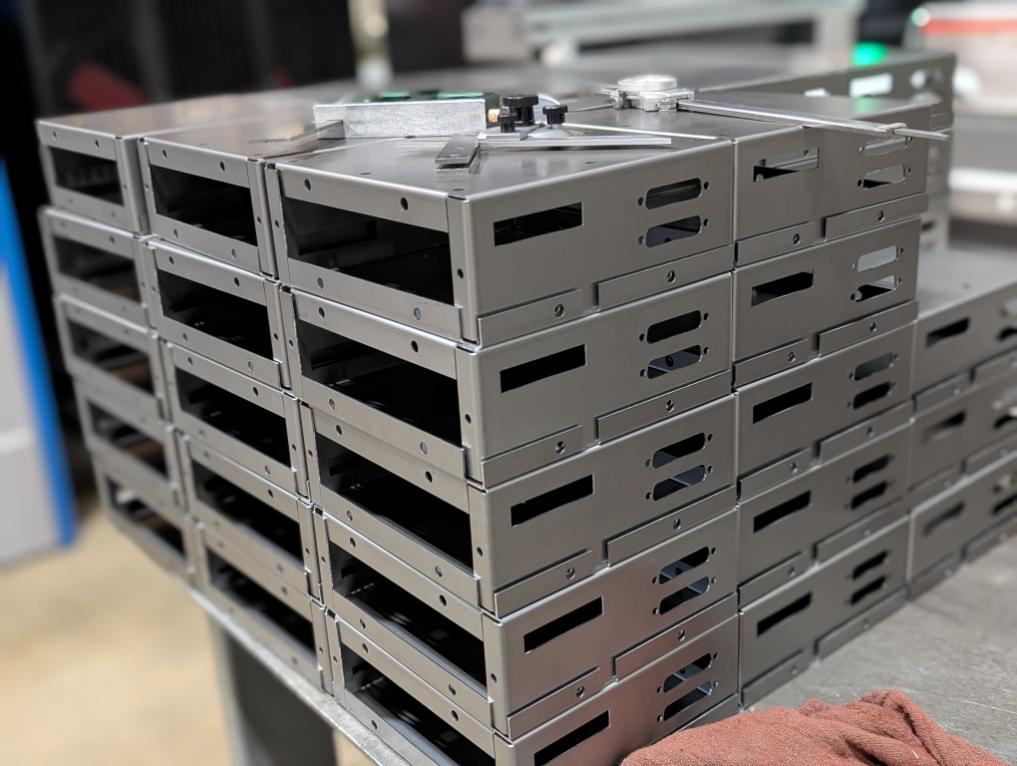
Custom Sheet Metal Enclosures: From CAD File to Finished Assembly
Custom sheet metal enclosures require more than cutting and bending metal. Openings must align, bends need to form correctly, doors and access panels must fit, and hardware, welds and finishes all need to work together.
Fox Valley Stamping Company manufactures custom sheet metal enclosures, electrical enclosure components and fabricated metal assemblies using laser cutting, press brake forming, welding, secondary services and assembly.
Quick Answer: How Are Custom Sheet Metal Enclosures Made?
A custom enclosure typically starts with a CAD file or dimensioned drawing. Components are laser cut, formed, welded or assembled, finished as specified and inspected before shipment.
The exact process depends on the material, design, tolerances, finish and production quantity.
From CAD File to Finished Enclosure
- Review the Design
Before production begins, the drawing or CAD file is reviewed for:
- Material and thickness
- Dimensions and tolerances
- Bend locations
- Holes and cutouts
- Doors and access panels
- Hardware and weld requirements
- Finish
- Production quantity
Reviewing these details early can identify features that may be difficult or unnecessarily expensive to manufacture.
- Laser Cut the Components
CNC laser cutting creates the enclosure profile and features such as mounting holes, ventilation openings, slots, cable openings, and control or component cutouts.
Producing these features while the sheet is flat prepares the components for forming and assembly.
- Form the Enclosure
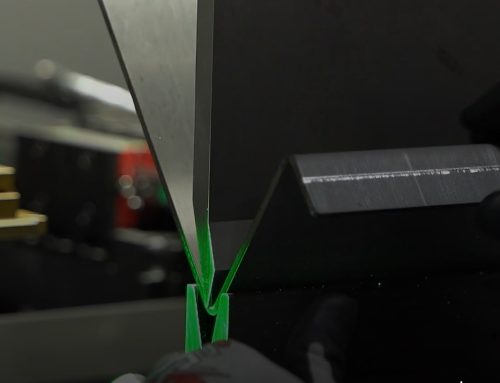
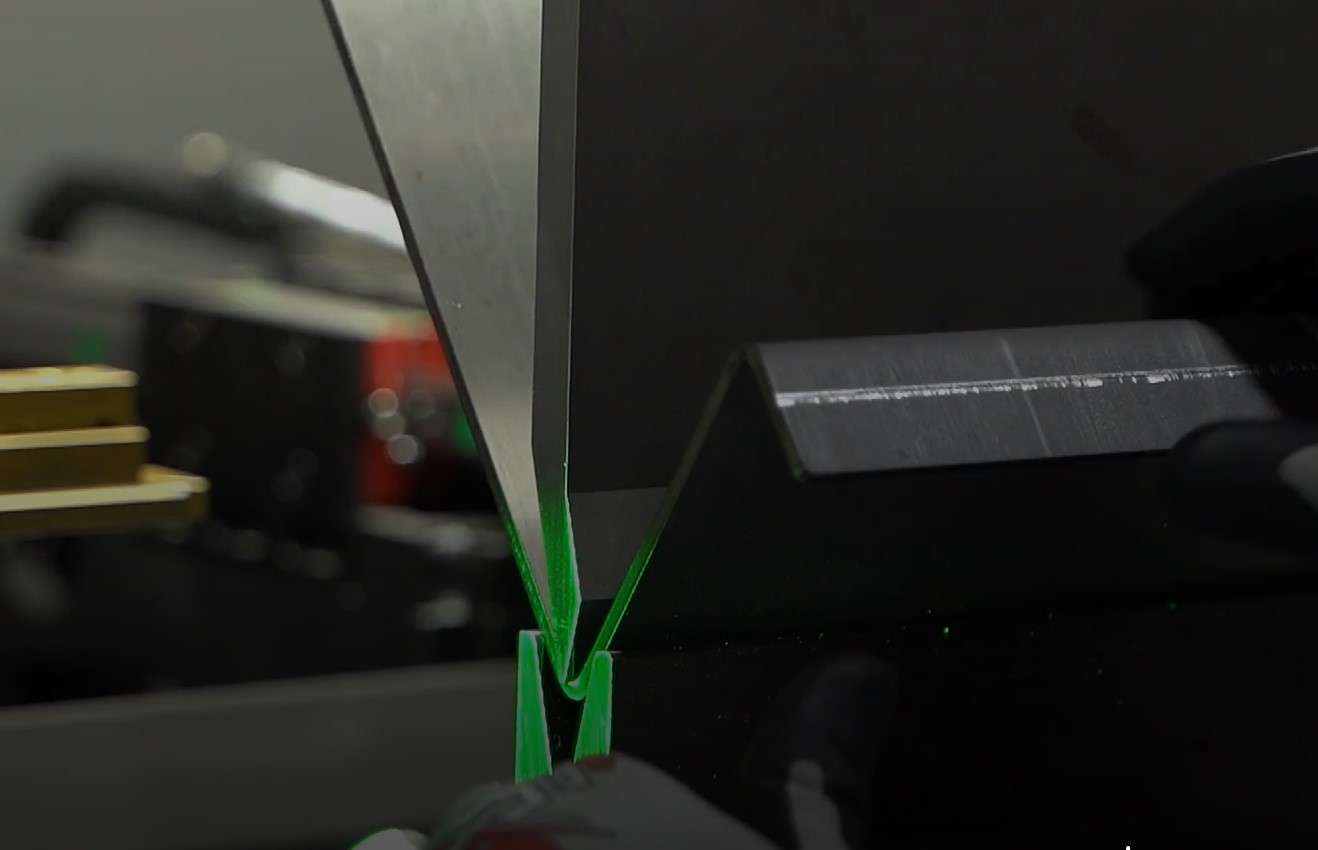
The cut parts are shaped using press brake forming.
Forming creates sides, flanges, covers, doors and mounting surfaces. Bend locations, flange dimensions and nearby holes or slots all need to be considered to maintain accuracy and reduce distortion.
For more design guidance, see our Press Brake Forming Design Guide.
- Weld and Assemble
Depending on the design, enclosure components may be joined through welding, mechanical fastening or a combination of both.
Permanent seams may be welded, while access panels, covers and doors may require removable hardware for future service.
- Add Hardware and Finishing
Fox Valley Stamping can integrate hardware and provide secondary services such as assembly and finishing based on project requirements.
Hardware and finish requirements should be identified early because they can affect earlier fabrication steps.
- Inspect the Finished Parts
Completed components are inspected against customer requirements for dimensions, hole and cutout locations, formed features, component fit, hardware placement, welds and other specified requirements.
Learn more about Fox Valley Stamping’s quality assurance processes.
Key Enclosure Design Considerations
A few decisions can make an enclosure easier and more cost-effective to manufacture:
Access: Allow practical access to components that may require service or replacement.
Ventilation and openings: Include vents, cable openings, controls and mounting features in the original design whenever possible.
Bend locations: Keep critical holes and slots appropriately positioned relative to bend lines.
Fasteners: Determine which joints should be permanent and which need to remain removable.
Seams and welds: Consider strength, access and appearance when locating seams.
Finish requirements: Specify coating, plating or cosmetic requirements with the RFQ.
Why Work With One Metal Fabricator?
A custom enclosure may require laser cutting, forming, welding, hardware installation, finishing and assembly.
Using one manufacturer for multiple operations can reduce supplier handoffs and simplify communication from the initial drawing through the finished assembly.
Explore Fox Valley Stamping’s complete metal fabrication services.
What Should You Send With an Enclosure RFQ?
For an accurate review and quote, provide as much of the following as possible:
- Dimensioned drawing
- 3D CAD file, if available
- Material and thickness
- Critical tolerances
- Quantity
- Hardware requirements
- Welding requirements
- Finish or coating requirements
- Assembly requirements
- Important cosmetic surfaces
Custom Sheet Metal Enclosures From Fox Valley Stamping
Fox Valley Stamping Company has provided American-made metal stamping and fabrication services since 1965.
We manufacture custom electrical enclosures, industrial equipment enclosures, fabricated sheet metal boxes, enclosure components and multi-part assemblies using the processes required for each project.
Have an enclosure ready to quote?
Contact Fox Valley Stamping or call 847-741-2277 to discuss your project.
Custom Sheet Metal Enclosure FAQs
What is needed to quote a custom sheet metal enclosure?
A dimensioned drawing or CAD file, material and thickness, quantity, tolerances, finish requirements and any welding, hardware or assembly requirements.
Can Fox Valley Stamping manufacture electrical enclosures?
Yes. Fox Valley Stamping has produced fabricated electrical enclosures and enclosure components using multiple fabrication processes.
Can laser cutting create enclosure openings and mounting holes?
Yes. Laser cutting can create mounting holes, ventilation patterns, slots, cable openings and other component cutouts as part of the flat enclosure components.
Can Fox Valley Stamping provide assembled enclosures?
Yes. FVS provides assembly services along with laser cutting, forming, welding and secondary operations.