

Accurate press brake forming begins with a manufacturable design. Material selection, bend geometry, feature placement, tolerances, and tooling can all affect part quality, production efficiency, and cost.
Reviewing these details before fabrication can help prevent distortion, difficult setups, delays, and avoidable expense.
Quick Answer: What Affects Press Brake Forming?
The primary factors include:
- Material type and thickness
- Bend radius and flange length
- Holes or slots near bend lines
- Material springback
- Bend tolerances
- Part geometry and bend sequence
- Tooling and setup requirements
The right approach depends on the specific material, part design, forming process, and functional requirements.
Material Type and Thickness
Carbon steel, stainless steel, aluminum, and other metals respond differently to bending. Material grade, hardness, and thickness can influence the required forming force, tooling selection, bend radius, and amount of springback.
Providing complete material specifications helps the metal fabricator plan the press brake process and quote the part more accurately.
Bend Radius and Flange Length
The inside bend radius affects material stress, finished dimensions, and tooling selection. A radius that is too small for the material may increase the risk of cracking, while a larger radius may affect how the part fits within an assembly.
Flange length also matters. Very short flanges may not sit properly on standard press brake tooling and could require a different die, specialized tooling, or another forming approach.
Because bend radius, material thickness, flange length, and die opening are connected, they should be reviewed together.
Holes and Slots Near Bends
Holes, slots, notches, and cutouts may stretch or distort when located too close to a bend line. The likelihood of distortion depends on the feature size, material thickness, bend radius, and tooling.
Depending on the design, the sheet metal fabricator may recommend:
- Moving the feature farther from the bend
- Adding bend relief
- Creating the feature after forming
- Changing the bend sequence
- Using alternative tooling
Critical feature locations should be clearly identified on the drawing so they can be reviewed before production.
Springback and Bend Tolerances
Metal naturally recovers slightly after forming pressure is released. This movement, known as springback, can affect the finished bend angle.
Modern press brake controls can compensate for expected springback, but material consistency, tooling, and proper setup remain important.
Tight tolerances can also increase the amount of setup, test bending, measurement, adjustment, and inspection required. They should be reserved for dimensions and angles that directly affect fit, function, or assembly.
Part Geometry and Bend Sequence
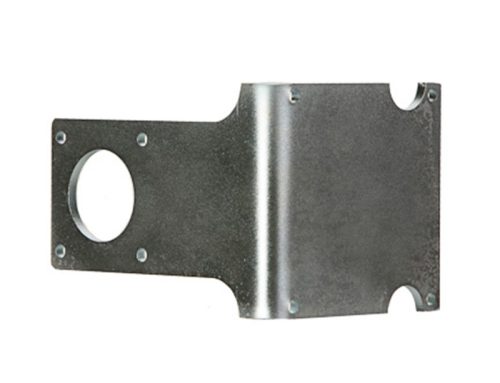
Parts with multiple bends must be formed in a workable order. A completed flange may block access to another bend, interfere with the tooling, or make the part difficult to position.
Deep channels, return flanges, enclosed shapes, and closely spaced bends can require additional handling, tooling, or setups. Reviewing the full three-dimensional part helps the metal fabricator identify these concerns before fabrication begins.
What Affects Press Brake Forming Cost?
Press brake forming cost is commonly influenced by:
- Material type, thickness, and part size
- Number and complexity of bends
- Tool changes and machine setups
- Part handling requirements
- Specialized tooling
- Tolerance and inspection requirements
- Production quantity
The number of bends alone does not determine cost. A part with several bends completed in one efficient setup may be less expensive than a simpler-looking component that requires repeated repositioning or tool changes.
What Should You Send for a Press Brake Forming Quote?
A complete quote package helps the metal fabricator review the part, identify possible forming concerns, and estimate production requirements accurately.
Include:
- A dimensioned drawing
- A 3D CAD file when available
- Material grade and thickness
- Required bend angles and radii
- Critical dimensions and tolerances
- Estimated quantities
- Finish or appearance requirements
Clearly marking the dimensions that affect fit and function helps direct production and inspection attention where it matters most.
Press Brake Forming at Fox Valley Stamping
Fox Valley Stamping uses Bystronic Xpert 40 and Xpert 100 CNC press brakes to provide precise press brake forming services for custom sheet metal components.
Press brake forming can also be coordinated with CNC laser cutting, short-run stamping, welding, and assembly. Keeping these metal fabrication processes with one partner can simplify scheduling and help maintain consistency from the flat blank through the finished component.
Learn more about how integrated manufacturing can reduce total production costs.
Planning a Sheet Metal Forming Project?
Early review can help identify forming concerns before they affect production, cost, or delivery.
Send Fox Valley Stamping your drawing, CAD file, material requirements, and estimated quantities to discuss an efficient fabrication approach.
Call 847-741-2277 or request a quote for your press brake forming project.
Press Brake Forming FAQs
What is the minimum bend radius for sheet metal?
There is no universal minimum bend radius. The appropriate radius depends on the material grade, thickness, hardness, tooling, and forming process.
How close can a hole be to a sheet metal bend?
The required distance depends on the hole size, material thickness, bend radius, and tooling. Features placed too close to a bend may stretch or distort during forming.
Can a press brake form short flanges?
Sometimes. Feasibility depends on the flange length, material thickness, bend angle, die opening, and available tooling.
Do tight bend tolerances increase cost?
They can. Tight tolerances may require additional setup, test bending, measurement, adjustment, and inspection.