How to Reduce Welding Distortion in Sheet Metal Parts and Assemblies
A sheet metal part can be cut and formed accurately and still move out of tolerance during welding. The risk increases when an assembly involves thin material, long welds, large flat surfaces or dimensions that must remain closely aligned.
Controlling welding distortion is not about finding one “low-distortion” welding process. It starts with the complete part: material, thickness, joint design, weld location, heat input, sequence, fixturing and geometry.
Quick Answer: How Do You Prevent Sheet Metal From Warping During Welding?
Welding distortion can often be reduced by:
- Limiting unnecessary heat input
- Avoiding more weld metal than the joint requires
- Planning weld locations and sequence carefully
- Maintaining consistent fit-up with proper fixturing
- Accounting for material thickness and part geometry
- Selecting the welding process based on the actual part requirements
The earlier these factors are considered, the easier it is to build distortion control into the fabrication process.
Why Does Sheet Metal Distort During Welding?
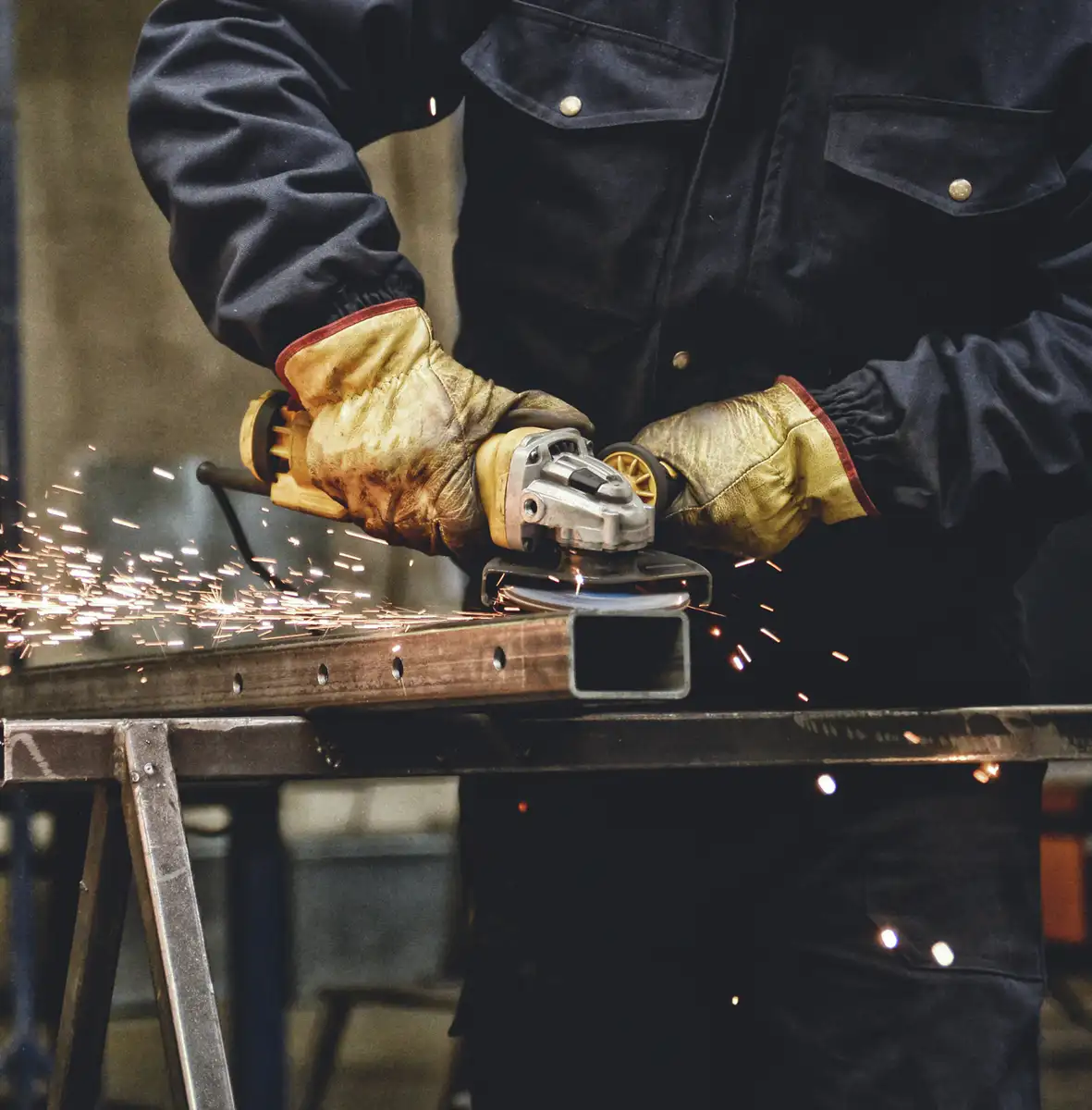
A weld heats a concentrated area of the part. As the weld and surrounding metal cool, they contract. When that shrinkage is uneven, it can pull the assembly out of its intended shape.
The result may be bowing, twisting, angular movement or dimensional changes around the welded area. Thin sheet metal can be particularly sensitive because it has less stiffness to resist that movement.
Heat Input Is Only Part of the Equation
Heat control matters, but simply turning down the heat is not a complete solution. The weld still needs to meet the requirements of the joint.
Welding parameters, travel speed, weld length and the amount of weld metal can all affect the amount of heat transferred into the assembly. The goal is to make the required weld without adding unnecessary heat or weld metal.
This is one reason weld requirements should match the actual function of the part. Oversized or unnecessarily long welds can add heat, production time and shrinkage without necessarily improving the assembly.
Joint Design and Part Geometry Can Affect Distortion
Where a weld is located can be just as important as how it is made.
Long seams across broad, flat panels can behave differently than shorter welds on parts strengthened by bends, flanges or other formed features. Welds near edges, openings, bends or critical dimensions may also affect how the finished assembly moves as it cools.
For fabricated sheet metal assemblies, welding should therefore be considered along with the laser cutting and forming operations that come before it.
Early review of the complete part can identify potential distortion concerns before they become production problems.
Weld Sequence and Fixturing Help Maintain Alignment
Welding an assembly entirely in one area can concentrate heat and shrinkage. Depending on the design, the welding sequence can be planned to distribute those effects more evenly through the part.
Tack welds, fixtures and clamps can also help maintain:
- Joint alignment
- Consistent fit-up
- Part position
- Repeatability from one assembly to the next
Fixturing alone does not eliminate distortion. It works together with weld sequence, heat control, joint design and the stiffness of the assembly.
Choosing the Right Welding Process
No welding process is automatically the best choice for every sheet metal assembly.
Fox Valley Stamping offers MIG, TIG, LightWELD laser welding and spot welding. Process selection can depend on material, thickness, joint configuration, required strength, appearance, production requirements and dimensional tolerances.
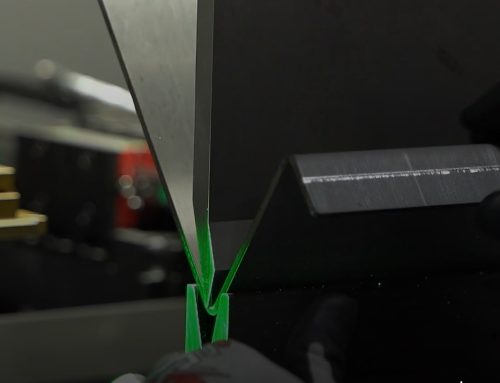
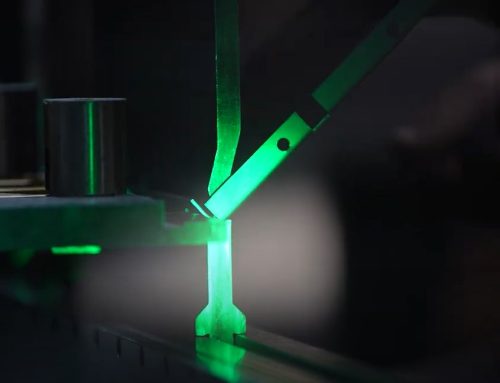
For appropriate applications, LightWELD laser welding provides an additional option for distortion control because its concentrated welding process uses relatively low heat input, helping reduce deformation of the surrounding material.
That does not mean laser welding should replace MIG, TIG or spot welding across the board. The better question is: Which process best fits this particular part and assembly?
For a closer look at the differences, see our Laser vs. MIG vs. TIG Welding Guide.
The Best Time to Address Distortion Is Before Welding
If a welded assembly contains critical dimensions, tight fit requirements or large thin surfaces, identifying those requirements early gives the fabricator more information to plan the job.
For a welded sheet metal RFQ, provide:
- CAD files and dimensioned drawings
- Material grade and thickness
- Required weld locations
- Critical dimensions and tolerances
- Finish or appearance requirements
- Production quantities
The drawing should make clear which dimensions and features are most important to the finished assembly. Not every dimension carries the same functional importance, and knowing where tolerances matter most helps guide manufacturing decisions.
One Fabrication Process Affects the Next
Distortion control does not begin at the welding station.
How a component is cut affects fit-up. How it is formed affects final geometry and stiffness. Those factors influence how the assembly fits together before welding begins.
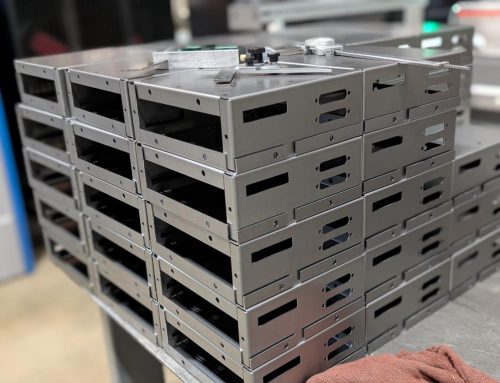
Fox Valley Stamping provides metal fabrication services including CNC laser cutting, press brake forming, MIG and TIG welding, LightWELD laser welding, spot welding, secondary operations and assembly.
Coordinating these processes through one manufacturer allows the complete fabrication sequence to be considered rather than treating welding as an isolated operation.
Planning a Welded Sheet Metal Assembly?
Send Fox Valley Stamping your drawings, CAD files, material requirements, weld specifications and quantities. We can review the project and determine a practical fabrication and welding approach based on the requirements of your part.
Call 847-741-2277 or request a quote to discuss your project.
Welding Distortion FAQs
What causes sheet metal to warp during welding?
Welding creates localized heating followed by cooling and contraction. When the resulting shrinkage is uneven, the metal can bow, twist or move out of its intended position.
Does lower heat input reduce welding distortion?
It can. Reducing unnecessary heat input generally helps limit the thermal expansion and contraction that contribute to distortion. Heat input still needs to be appropriate for the required weld.
Is laser welding better for preventing distortion?
Laser welding can reduce distortion in suitable applications because it concentrates energy in a relatively small area with low overall heat input. Whether it is the best choice depends on the material, joint, part geometry and production requirements.
Can welding distortion be completely prevented?
Not in every application. The practical goal is to control distortion so the completed assembly meets its dimensional, fit and functional requirements.